

Hydroponic Fodder Containers for Saudi Arabia and GCC Livestock Farms
Produce fresh fodder where your animals are. Bring more of your forage supply under your own control.
Smart Fodder Farms offers containerised hydroponic systems for growing fresh livestock fodder on your farm. Choose from three models with approximate production capacities ranging from 275 to 840 kg of fresh fodder per day, using six-day production cycles.
For dairy farms and livestock businesses evaluating local feed production, a container provides a starting point: a defined production capacity, an enclosed growing environment and an installation that can be planned around your site.
Smart Fodder Container
Tell us your location, livestock type and production target.

Request a Proposal for My Farm
Compare Container Models
20-foot container
A compact, efficient, and scalable solution for livestock farms that need to produce fresh forage on-site quickly and with control. Hydroponic cultivation technology in a small space, reducing external dependence and improving daily food security.

40-foot container
Greater capacity for livestock farms and dairy companies that need to produce more fresh fodder every day. Hydroponic fodder container designed to increase on-site production, reduce dependence on external supply, and improve operational efficiency.
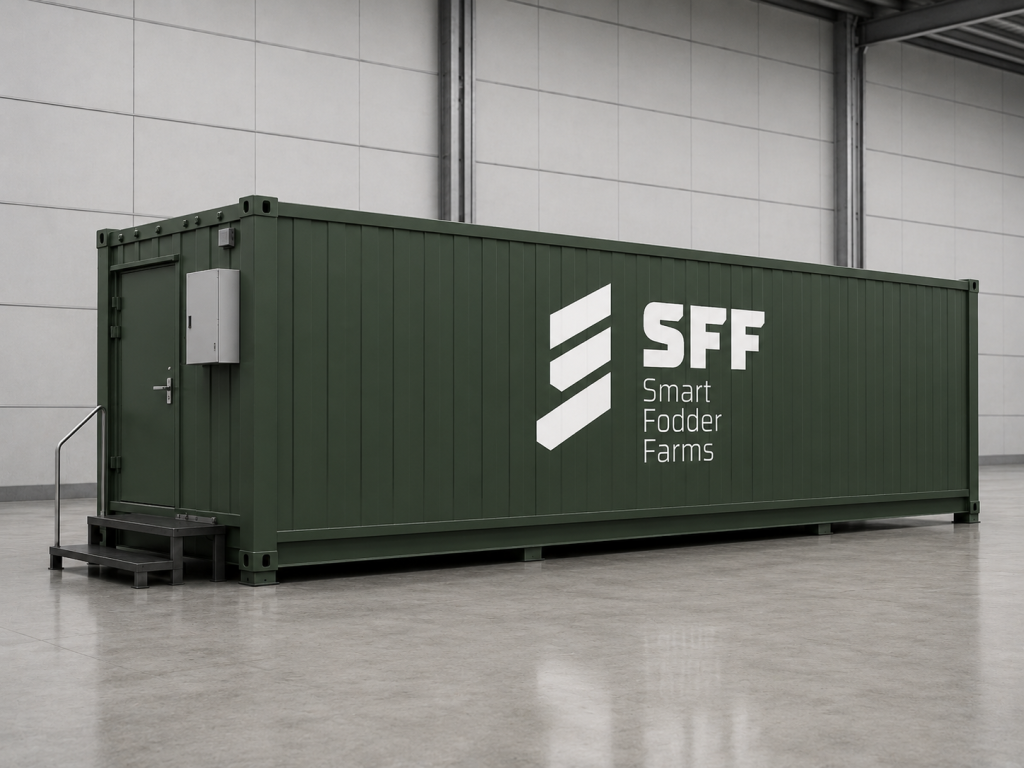
20-foot HC container
High capacity for livestock farms seeking to maximize daily fresh forage production. Hydroponic forage container designed for increased yield, enhanced autonomy, and a consistent year-round supply.
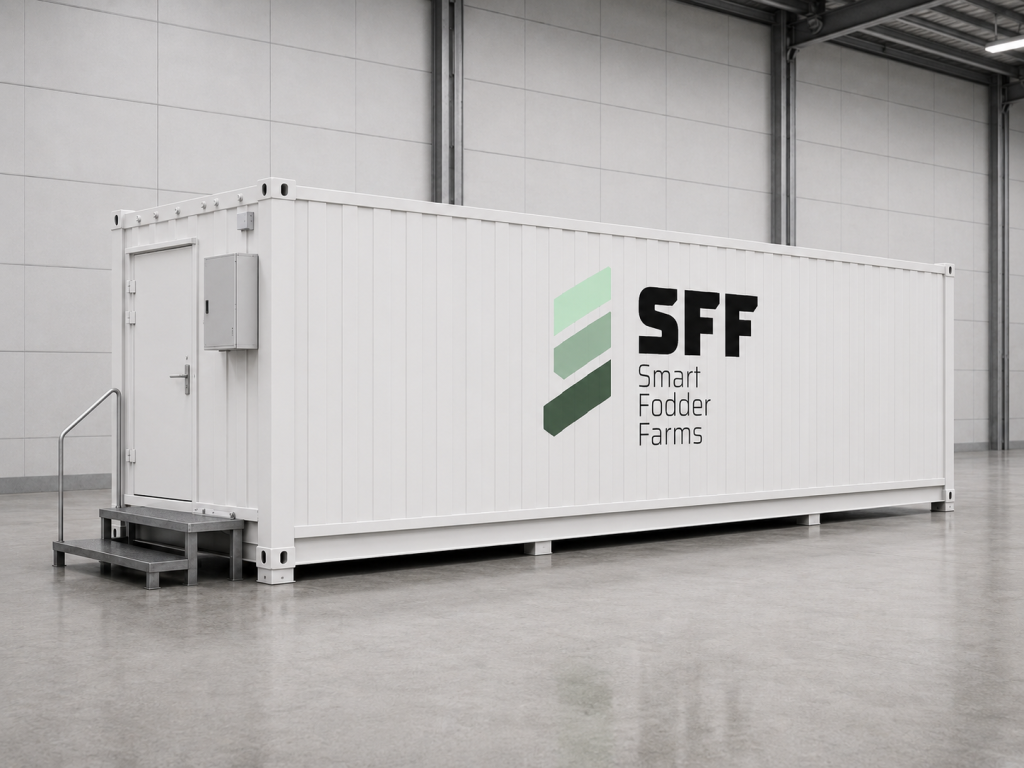
20-foot container
8 growing levels-
Spacing between levels: 22 cm
-
Total trays: 144
-
Daily capacity: 24 trays
-
Capacity per level: 9 trays
-
Growing rows: 2
-
Dimensions: 6058 × 2438 × 2591 mm
-
LED grow lights: 16 sets
-
Air conditioning: 3500 W cooling / 4000 W heating
-
Irrigation nozzles: 175
-
Shut-off valves: 16
-
Ozone generator
-
Germination system
40-foot container
11 growing levels-
Spacing between levels: 24 cm
-
Total trays: 360
-
Daily capacity: 60 trays
-
Capacity per level: 20 trays
-
Growing rows: 2
-
Dimensions: 12192 × 2438 × 2896 mm
-
LED grow lights: 18 sets
-
Air Conditioning: 5100 W Cooling / 6000 W Heating
-
Irrigation nozzles: 450
-
Shut-off valves: 18
-
Ozone generator
-
Germination system
40ft HC Container
11 growing levels-
Spacing between levels: 18 cm
-
Total trays: 440
-
Daily capacity: 73/74 trays
-
Capacity per level: 20 trays
-
Growing rows: 2
-
Dimensions: 12192 × 2438 × 2896 mm
-
LED grow lights: 22 sets
-
Air Conditioning: 5100 W Cooling / 6000 W Heating
-
Irrigation nozzles: 550
-
Shut-off valves: 22
-
Ozone generator
-
Germination system
Download technical data sheets:
How much of your forage supply could you produce on your own farm?
For a livestock business purchasing imported alfalfa, the decision to produce forage locally starts with a practical question: which part of the feeding programme could be supplied from within the farm?
Smart Fodder Farms brings fresh-fodder production close to the animals, using growing trays inside a controlled environment. On-farm production and reduced transport of the resulting fodder are central to the container solution.
Assess a reduction in imported forage purchases
Evaluate hydroponic fodder as part of your existing feeding programme. Once the appropriate inclusion has been established, you can assess how much purchased forage it could replace and what that would mean for procurement, deliveries and storage.
The business case should include the container’s own inputs: seed, water, electricity and the daily operating routine.
Grow fresh fodder without allocating fields to that production
The container uses multi-level growing trays, irrigation, lighting and climate-control equipment within an enclosed space. This creates an option for farms assessing fresh-fodder production in dry and arid locations, where allocating land to an additional irrigated crop may be difficult.
Plan production around daily demand
The three container models are specified for six-day production cycles, with a daily tray capacity and an approximate daily harvest. Select the production level your feeding programme can use consistently.
Compare our hydroponic fodder containers
Choose a starting capacity for your project, then discuss the site conditions and operating requirements with our team.

| Container model | Approximate fresh-fodder production | Total tray capacity |
|---|---|---|
| Smart Fodder Container 20’ DV | 275 kg/day | 144 trays |
| Smart Fodder Container 40’ | 690 kg/day | 360 trays |
| Smart Fodder Container 40’ HC | 840 kg/day | 440 trays |
A first installation can supply a defined group of animals while you establish the operating routine and evaluate its place in your feeding programme. For a larger project, use your required daily output to discuss the number and configuration of units.
Climate-controlled fodder production for hot-climate projects
Insulation, cooling and ventilation within the growing environment
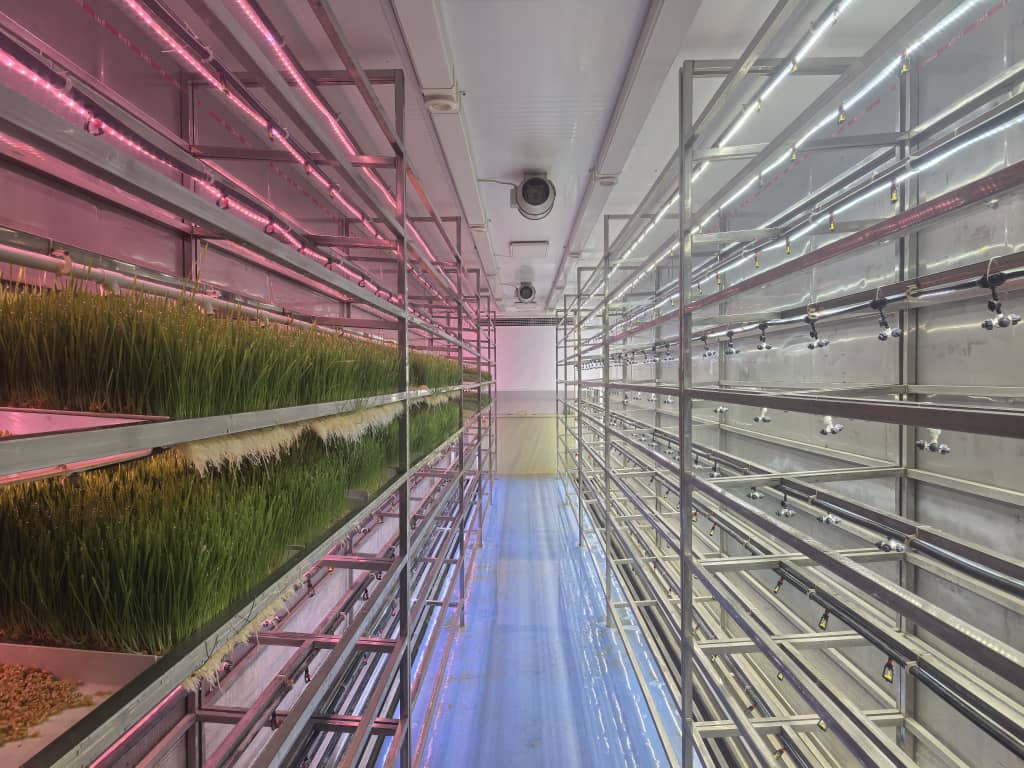
Smart Fodder containers combine 80 mm polyurethane insulation, an internal stainless-steel structure, industrial air conditioning, ventilation and air circulation. Temperature and humidity sensors provide the measurements used to manage the growing environment.
For a project in Saudi Arabia or elsewhere in the GCC, discuss the proposed location, outdoor design conditions, water supply and electrical infrastructure before selecting the final configuration. The operating conditions for your installation need to be established for that site.
Control over irrigation, lighting and environmental settings
A Siemens controller manages functions including irrigation, lighting, air conditioning, ventilation and air circulation, with manual and automatic control options. The system also provides real-time temperature and humidity monitoring with historical data records.
These controls give your team a way to manage and review the production environment alongside its daily checks and operating procedures.
From seed preparation to fresh fodder
Hydroponic green fodder is produced by germinating seeds and growing them without soil or a conventional growing substrate. The harvested material includes the green shoots, roots and remaining seed.
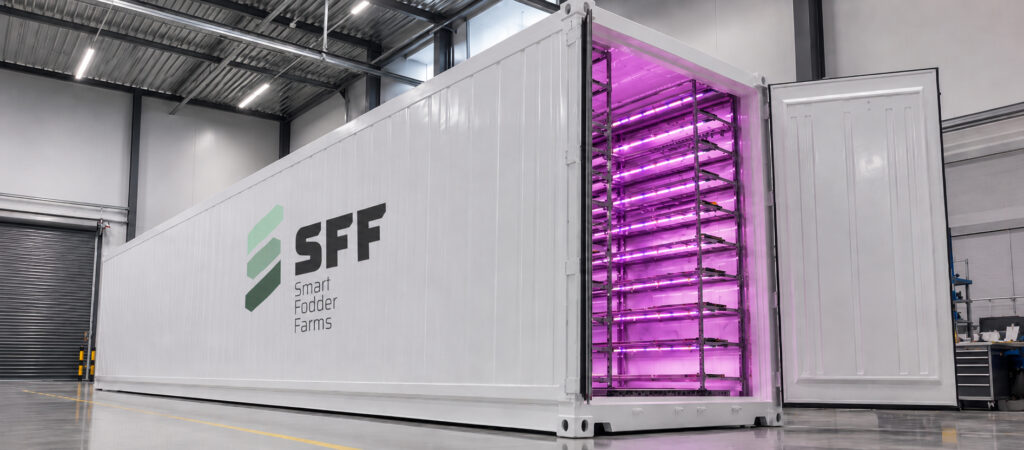
Smart Fodder containers include seed-soaking and germination equipment, growing trays, irrigation, drainage, LED lighting and ozone-disinfection equipment. These components support the production process within the container.
Plan the daily workflow for seed preparation, tray handling, harvesting and cleaning alongside the automated environmental controls. This operating routine should be part of the project from the beginning.
Plan the system around your livestock operation
Dairy farms and milk-production businesses
Start with the fresh-fodder volume that your feeding programme can use each day. Agree the intended inclusion with your livestock nutritionist, identify the animal group to be supplied and use that demand to select a production capacity.
For an initial dairy-farm project, this approach allows you to evaluate on-farm production within a defined feeding programme before considering a wider rollout. Compare the investment and operating requirements with your current forage procurement, using your own farm data.
Beef cattle and feedlots
Define the intended animal group, daily feeding requirement and route from the container to the feeding area. Include handling and distribution in the project discussion so that the production unit fits the way your operation works.
Sheep, goats and camels
Discuss the species, number of animals and production objective when requesting a proposal. The container should be sized around the fresh-fodder requirement established for that group, rather than a general number of animals per unit.
Hydroponic fodder containers vs imported alfalfa and other alternatives
Use the following comparison to assess the production and procurement approach that fits your project. It compares operating models, rather than claiming a fixed nutritional equivalence or financial return.
| Solution | Main advantage | Limitation or requirement to consider |
|---|---|---|
| Buy imported alfalfa | No investment in an on-farm forage-production system. | Continued exposure to purchase prices, freight, delivery schedules and storage requirements. |
| Grow forage in the field | Own production within an agricultural cropping programme. | Requires suitable land, irrigation, crop management and planning around growing conditions. |
| Use an open hydroponic system | Potentially simpler infrastructure and lower initial investment, depending on capacity and equipment. | Less separation from outdoor conditions; the level of climate control depends on the installation. |
| Install a Smart Fodder container | Defined daily production capacity within an enclosed, controlled growing environment; a basis for staged deployment. | Requires an initial investment, electricity, seed, water and an operating and hygiene protocol. |
For the economic comparison, assess the complete cost of producing and using the fodder on your farm. Evaluate any replacement of alfalfa within the feeding programme, considering dry matter and nutrient contribution rather than assuming a tonne-for-tonne substitution based on fresh weight.


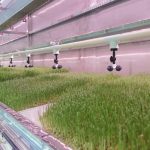

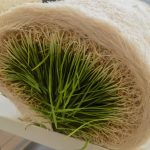

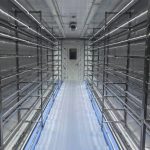

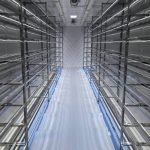

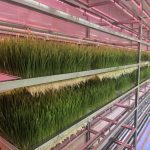
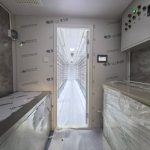
What's Included in the Container
Each hydroponic fodder container integrates the infrastructure and technology necessary to produce fresh fodder in a controlled environment. Depending on the model, it includes an insulated structure, growing racks, trays, LED lighting, automated irrigation, climate control, ventilation, ozone disinfection, a germination system, and parameter automation for stable, efficient, and scalable operation.
- Insulated Structure
- Growing Racks
- Automated Irrigation
- LED Lighting
- Climate Control
- Ventilation and Recirculation
- Ozone Disinfection
- Germination System
- Control Panel
- Parameter Monitoring
Start with one container. Expand from your own operating results.
A first container gives you a defined scale at which to establish the production routine, record actual output and operating inputs, and assess how the fodder fits your livestock business.
Use those results to plan additional units. Include space, electrical capacity, water supply, seed storage and daily handling in the expansion discussion from the outset.
For dairy businesses, feedlots and agroindustrial developments, this offers a practical way to assess an initial production unit before committing to a larger installation.
Agricultural engineering behind your fodder production
Smart Fodder Farms forms part of the J. Huete International group, whose activities include agriculture, greenhouse technology and agricultural installations. This provides the engineering context behind the company’s fodder-production solutions.
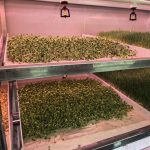
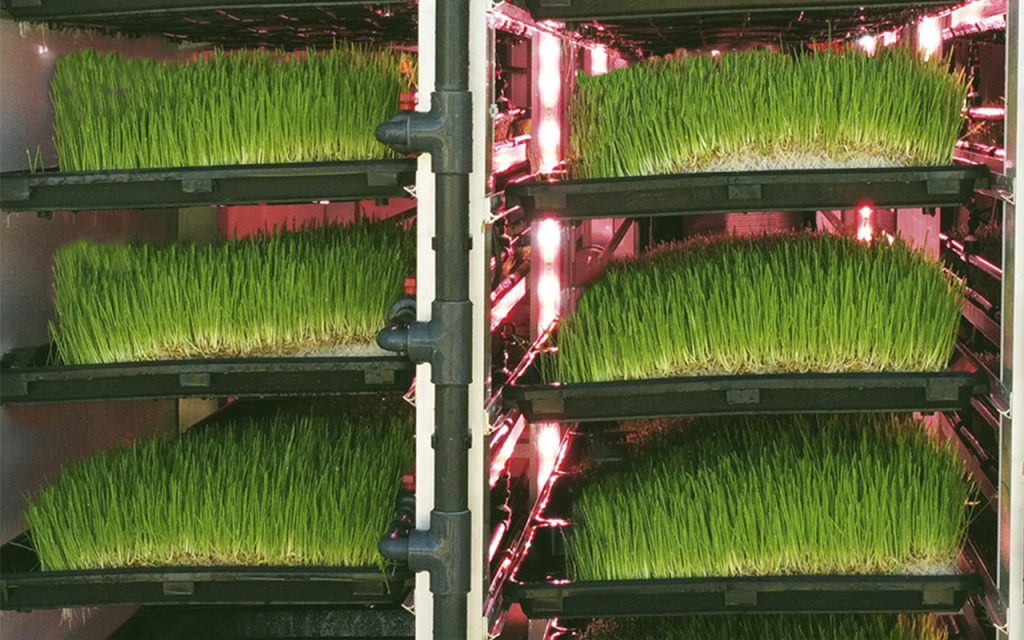
Our project documentation also shows a Smart Fodder Farms container producing hydroponic green fodder for the University of Murcia’s lamb research farm in Spain, with photographs of the installed unit and its growing trays.
FAQ: Frequently Asked Questions
Which hydroponic fodder system should I choose for a farm in Saudi Arabia?
Begin with your required daily output, the proposed installation site and the operating resources available on the farm. Compare production capacity, climate-control configuration, water and electricity requirements, and the daily workflow. A Smart Fodder container is an option to evaluate when your project calls for enclosed production and a defined starting capacity.
Can hydroponic fodder reduce my dependence on imported alfalfa?
That is an objective to assess within your farm’s feeding programme. First establish the appropriate inclusion of hydroponic fodder, then calculate the resulting change in purchased forage. The container specifications do not establish a fixed alfalfa-replacement rate, so this calculation must be made for the intended ration and animal group.
How much fresh fodder can one container produce?
The approximate daily production specified for each model is 275 kg for the 20’ DV, 690 kg for the 40’, and 840 kg for the 40’ HC, based on six-day production cycles. These are fresh-weight figures.
How many dairy cows can one container supply?
Use the fresh-fodder inclusion agreed for each animal to calculate the production requirement for the group. The number of cows will therefore depend on the feeding programme and the selected container. The technical sheets specify fodder output, rather than a fixed number of dairy cows per unit.
Is the container fully automated?
The container has automatic control options for environmental and production functions, including irrigation, lighting, ventilation and air conditioning. Temperature and humidity can be monitored in real time. Discuss the staffing and procedures for seed preparation, handling, harvesting and cleaning as part of the project; the technical sheets do not describe those tasks as a fully automated handling process.
What water and electricity supply will my installation need?
Request the requirements for the selected model and proposed location. The technical sheets identify irrigation and climate-control equipment, but do not provide a site-specific total daily water or electricity consumption figure. Confirm these requirements during project specification, including the needs of the complete operating routine.
Can I begin with one container and add more later?
A staged project can begin with one unit and use the initial operating results to inform expansion. Discuss the future production target when planning the first installation, so that space, utilities and handling arrangements can be assessed for additional units.
How much does a hydroponic fodder container cost?
Request a quotation for the model and project scope you need. Include the destination and your installation requirements so that equipment, transport, commissioning, training and support can be discussed and clearly defined in the proposal.
Saudi Arabia & GCC
Request a hydroponic fodder container proposal
Tell us where your farm is and how much fresh fodder you would like to produce.
Share your livestock numbers, feeding objective and preferred project timing. Start a conversation with Smart Fodder Farms about the appropriate container capacity and the requirements for your location.
Unsure which model to choose? Describe your farm and feeding objective in the project details.
Prefer to contact us directly? marketing@smartfodderfarms.com